
Projects
Socioeconomic status (SES), brain and depression
2023.03 - Current
Supervisor: Dr. Yu (Hannah) Hao, Icahn School of Medicine at Mount Sinai
Project 1: Investigating Social Skill in relation to SES and Depression
Stress and parenting have been established as mediators between SES and depression. Individuals from low-SES backgrounds frequently exhibit deficits in social skills, including weaker emotional and self control, along with a greater reliance on maladaptive emotion regulation strategies. Interestingly, these deficits are also commonly found in individuals with depression. However, the role of social skills with respect to both SES and depression remains unclear.
As the project lead, I sought to fill this research gap by examining the potential influence of social skills on the relationship between SES and depression. I conceptualized and critically assessed this idea by systematically reviewing over 50 relevant articles. Currently, Dr. Hao and I are co-authoring the resulting manuscript, which we aim to submit for peer review by December.

Project 2: Systematic review of brain structure and function underlying depression and socioeconomic status
Why is depression far more common at lower levels of SES? And, is the surplus of depression at lower SES just more of the same type as depression found at higher levels, or is it distinctive? In this project, we addressed these questions by examining the neural correlates between SES and depression, based on evidence from structural and functional MRI studies.
In this study, I explored the neural basis of socioeconomic status and its impact on mental health outcomes. This research makes use of methods from neuroscience and psychology, including functional magnetic resonance imaging (fMRI) and self-reported emotion assessments, to gain a better understanding of the relationship between socioeconomic status and mental health. As an undergraduate research assistant, conducted an extensive literature review of over 200 articles on MRI, SES, and depression. Currently, Dr. Hao and I are co-authoring the manuscript, which we aim to complete by September for peer review.

Mental and Physiological Strains of Male and Transgender Sex Workers
2023 - Current
Supervisor: Dr. Maurice Nagington, University of Manchester
Sex workers face stigmatization and marginalization, resulting in significant mental and physiological burdens. However, male and transgender sex workers have largely been ignored in sex work-related research. Yet, compared to their counterparts, they face significantly more adverse outcomes, including higher rates of HIV infection, double-stigmatization due to their sexual orientation and profession, and policy disadvantages.
In this research, I explored the multiple challenges faced by male and transgender sex workers. This was achieved by collaborating with the local LGBTQ+ community, The Men’s Room, and directly engaging with their service users to understand their needs and burdens. Additionally, I conducted an extensive background literature search of over 100 research articles and generated research outputs. Currently, I am preparing a first-author manuscript, which we aim to submit for peer review by September.
Interpersonal Emotion Regulation Lab, University of Manchester
2022.11 - Current
Supervisor: Dr. Belen Lopez-Perez, University of Manchester
Project 1: Using ChatGPT to Understand People’s Interpersonal Emotion Regulation Strategies
An important drawback of working with qualitative information is that coding participants’ responses can be extremely tedious and time-consuming. In this context, the emergence of open artificial intelligence (AI) might open a new path for emotion researchers trying to understand whether emotion categorisation can be achieved to performance levels similar to and possibly above the ones observed in humans.
As the leader of a six-person undergraduate team, I independently designed and employed instructions for GPT. I also trained research assistants on scripting and coding, schedule weekly meetings and task allocation. Currently, Dr. Lopez-Perez and I are co-authoring a paper on this project and aim to submit for peer-review in December.
Project 2: Interpersonal Emotional Regulation in Cross-Cultural Clinical Samples
How can we influence the emotions of others? Are there different strategies employed across diverse cultural groups? We investigated these questions by collecting both qualitative and quantitative responses from over 700 participants in the UK, US, and Malaysia.
My responsibilities included conducting thematic analyses on more than 2500 qualitative responses and coding them into quantitative codes. I also cleaned and analysed data using Python, performed Latent Profile Analyses using MPlus, and constructed correlation and regression models. Currently, Dr. Lopez-Perez and I are co-authoring two papers on this project.
My abstract on this topic has been accepted by the British Psychological Society’s Social Psychology Section for their 2023 Annual Conference.

Project 3: Changing Others’ Emotions using Ecological Momentary Assessments
How frequently do people alter others’ emotions in their daily lives, and by what strategies? Do they improve how others feel, or worsen their emotional states? In this project, we investigated these questions by assigning participants to engage in a week-long longitudinal study involving Ecological Momentary Assessments three times a day.
My responsibilities included: recruitment - using email, posters, and forums to enlist more than 300 individuals for an intensive week-long study; supervising the coordination and tracking of participant engagement to maintain a participation rate of over 50%; and cleaning and analyzing longitudinal data using Python and Two-Level Dynamic Structural Equation Models.

MAGNET LAB, Manchester Centre for Health Psychology
2022.05 - Current
Supervisor: Dr. Anna M. Hood, University of Manchester
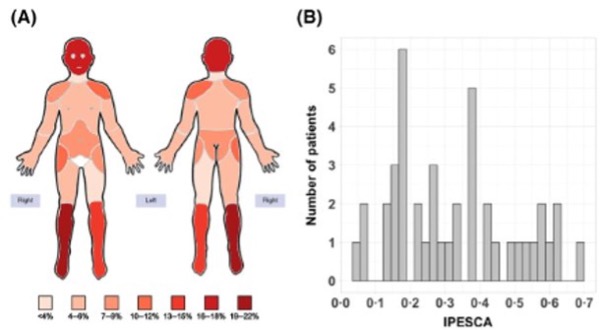
Project 1: Index of Pain Experience in Sickle Cell Anaemia (IPESCA)
Collaboration: Prof. Christina Liossi, University of Southampton; Prof. Fenella Kirkham, University College London
Daily pain in children with sickle cell anaemia (SCA) has previously been infrequently considered and measured. However, paediatric patients with SCA experience significant detrimental outcomes, including cognitive deficits, a lower quality of life, psychological burden, fatigue, and more. Currently, there is no reliable proxy to measure pain burden in this patient population, and there is no e-Diary specifically targeting SCA patients in the UK.
Using existing data from a randomised-controlled clinical trial, I reanalysed the information and calculated the feasibility of implementing an App-based e-Diary designed for patients with SCA in the UK. I also conducted an exploratory analysis on the longitudinal pain burden and cognitive abilities.
At present, I am writing the manuscript as the first author. The abstract for this dataset has been accepted for a special issue, Women in Science: Pediatric Pain, on Frontiers in Pain Research, and the final manuscript will be submitted by October.
Project 2: The Interaction between Pain and Executive Function in Paediatric Patients with SCD
Emerging evidence suggests that pain can have a negative impact on cognitive functioning, particularly executive function. Pain is the hallmark of Sickle Cell Disease (SCD), yet the interplay between pain intensity and executive function in SCD remains insufficiently explored.
Using a dataset from Alabama, US, I cleaned and analysed the data to determine whether pain intensity could predict executive function in paediatric patients with SCD, which is a crucial part of development. I am currently writing the manuscript as the first author, and the abstract has been accepted by European Paediatric Psychology Conference, 2023.